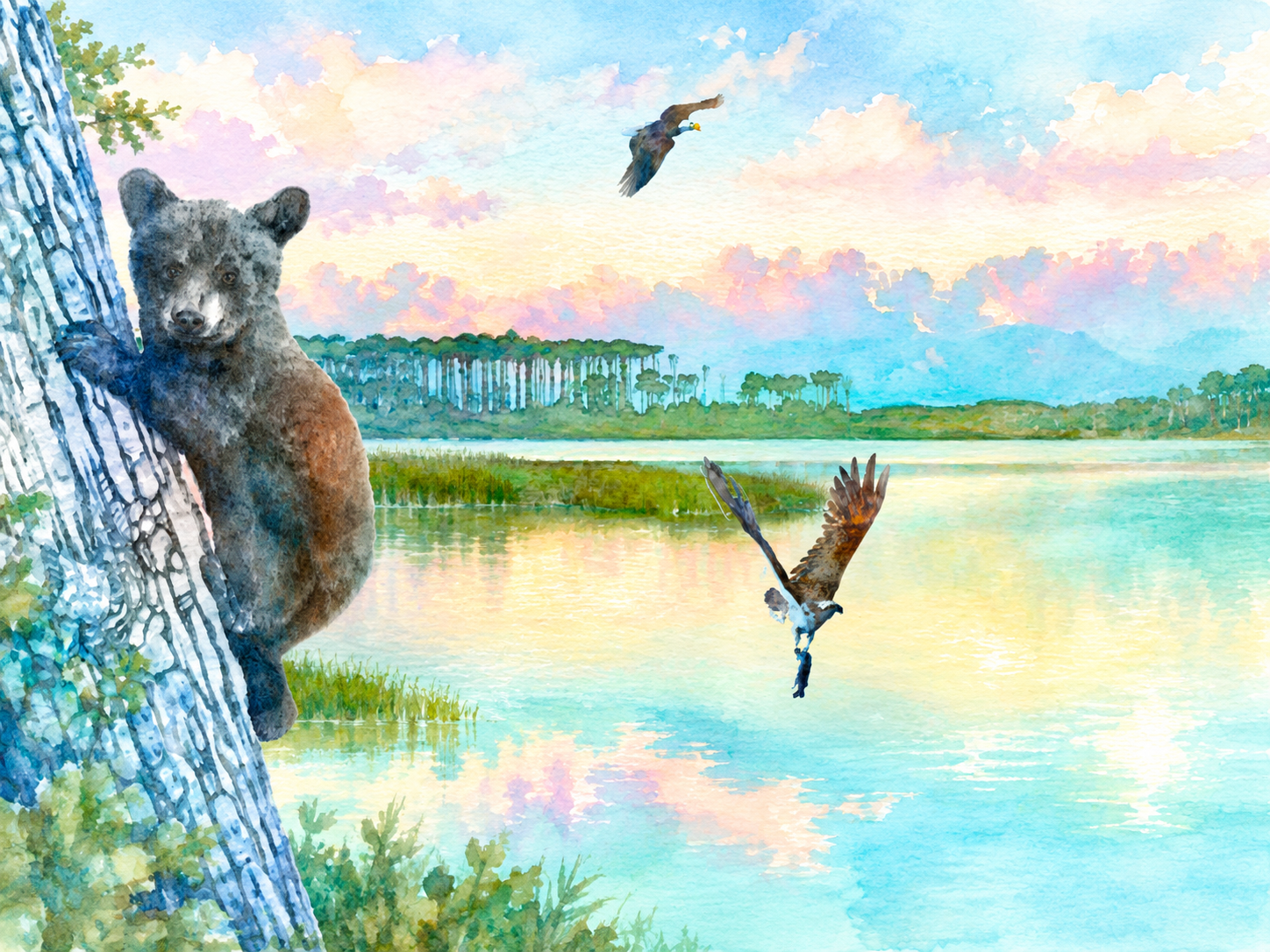
Real learning.
Real adventure.
Hands-on, adventure-based education with eternal purpose. We strive to cultivate strong character and essential life skills through awareness, critical thinking, and resilience—all rooted in Christ’s teachings.
Why Adventure Academy
Discover creation.
Grow closer to the Creator.
Our mission is to bring students into nature to recognize God’s handiwork and grow in their understanding of—and relationship with—their Creator.
Through surfing, hiking, foraging, and outdoor exploration, students celebrate life, build friendships, and learn to care for God’s creation.
Modern conveniences are not guaranteed. Learning how to find food, build shelter, and meet basic needs develops resourcefulness and confidence to care for ourselves and others when circumstances change.
Classes
Find your next adventure.
Distinct experiences, one consistent purpose: helping students grow with faith, skill, and wonder.
Spring 2027 enrollment opens November 1, 2026
Survival Course
Build a strong foundation in wilderness survival through structured, hands-on training in water, fire, shelter, tracking, and first aid—grounded in truth, discipline, resilience, and tenacity.
Advanced Survival Course
Build your own bow and develop archery and tracking skills with deep respect for life. Prayer, gratitude, and the responsibility of providing for others guide field outings and lessons in responsible hunting and wildlife stewardship. An actual hunt or harvest is not guaranteed.
Beekeeping & Organic Farming
Learn to care for honeybees, build a nuc box, and prepare to bring a starter colony home. Brief lessons in soil health and seasonal planting help students create habitats that feed bees and other pollinators.
What students learn
Skills for a lifetime.
Explore each class through practical skills, shared experiences, and growth in faith and character.
Survival Course
Learn the Land. Build Confidence.
Learn to meet basic needs outdoors while growing in resourcefulness, discipline, and faith. Students practice finding and treating water, building shelter, making fire, navigating, and helping others through hands-on challenges. Repetition and teamwork build the confidence to make thoughtful decisions in nature and recognize when to ask for help.
- Age Group
- Boys Ages 7–12
- Duration
- 10-Week Program
- Class Size
- Maximum 12 Students
- Location
- Point Washington
- Issued Gear
- Basic Bug-Out Kit
- Tuition
- $1,395 per student
What to Bring
A filled water bottle, packed lunch, closed-toe shoes, weather-appropriate outdoor clothes, and a positive, respectful attitude.
A Day in the Life
Observe & Learn
Begin with a character focus and an introduction to the day’s outdoor skill. Watch a demonstration, ask questions, and learn how to use the equipment.
Practice & Explore
Rotate through hands-on drills and team challenges, with a break for lunch and water. Return to previous skills so understanding grows through practice.
Reflect & Restore
Care for the site and equipment, discuss what worked, and connect the day’s experience with Yeshua’s teaching.
Weekly Curriculum
- Week 1
Outdoor Mindset & Essential Needs
Preparedness and trust.
Learn to pause, observe, and identify priorities when plans change. Explore the needs for shelter, water, warmth, and help; assemble a basic day pack and practice communicating your location.
- Week 2
Water: Sources & Filtration
Discernment and curiosity.
Compare cloth prefilters, gravity filters, pump filters, and hollow-fiber filters. Build a demonstration sediment filter and see why clearer water is not necessarily safe to drink. Learn what each type of filter can and cannot remove.
- Week 3
Water: Purification & Safe Storage
Care and responsibility.
Distinguish physically filtering water from disinfecting it. Compare boiling, approved treatment products, and UV methods through instructor-led demonstrations, then practice keeping treated water separate from dirty containers. Discuss why chemical contamination requires another water source.
- Week 4
Fire Fundamentals
Attention and restraint.
Explore tinder, kindling, fuel, and different ignition methods through supervised practice. Learn site selection, changing weather, when not to light a fire, and how to extinguish it fully.
- Week 5
Shelter & Protection from the Elements
Diligence and teamwork.
Compare natural cover and tarp shelters, choose suitable sites, and practice knots and simple shelter construction. Discuss ground insulation, rain, wind, and leaving living trees undamaged.
- Week 6
Finding Your Way & Signaling
Honesty and cooperation.
Introduce maps, compass directions, landmarks, and route planning. Practice a buddy system, what to do when separated, and visible or audible signals for help.
- Week 7
Basic First Aid in the Field
Compassion and service.
Practice calling for help, explaining an emergency, and using a simple first-aid kit. Work through guided scenarios involving minor cuts, blisters, and recognizing heat illness, without replacing professional medical care.
- Week 8
Tracking & Reading Nature
Wonder and attentiveness.
Look for animal tracks, feeding signs, habitats, and weather clues. Begin identifying common plants and their lookalikes; focus on observation, with no tasting unless an instructor has verified the plant and approved it.
- Week 9
Campcraft & Everyday Resourcefulness
Faithfulness and initiative.
Combine useful knots, equipment care, food hygiene, and instructor-supervised tool skills. Organize a simple camp and practice sharing responsibilities while conserving supplies.
- Week 10
The Survival Skills Challenge
Confidence and gratitude.
Work as a team through a guided daytime challenge that brings together shelter, water treatment, navigation, signaling, and first-aid decisions. Explain choices, review progress, and leave the site cared for.
Advanced Survival Course
Build Your Bow. Read the Land.
Build a bow, practice archery, and learn to read the land while developing a deep respect for life. Students explore the spiritual weight of taking an animal’s life, prayer and thanksgiving before and after a harvest, and the responsibility of providing food for others. Through tracking, field outings, and hands-on projects, young men grow in patience, confidence, and stewardship grounded in Yeshua’s teachings. Outings emphasize observation and preparation; an actual hunt or harvest is not guaranteed.
Pre-Requisite: Successful Completion of Survival Course
- Age Group
- Ages 10 and Older
- Duration
- 10-Week Program
- Class Size
- Maximum 12 Students
- Location
- Point Washington
- Issued Gear
- Advanced Survival Kit
- Tuition
- $1,395 per student
What to Bring
A filled water bottle, packed lunch, closed-toe shoes, weather-appropriate outdoor clothes, and a notebook. Any tools or archery equipment must be approved by the instructor.
A Day in the Life
Read the Land
Begin with prayer, gratitude, and the day’s character focus before heading into the field. Observe wildlife and learn to track with patience and respect for living things.
Build & Practice
Return each week to the bow project and supervised archery, alongside tracking, stalking, or arrow-making lessons. Break for lunch, water, and rest.
Reflect & Give Thanks
Care for tools and the land, then discuss what we observed and how it felt to practice the skills of a provider. Close with prayer and a Gospel reflection on gratitude, restraint, and responsibility.
Weekly Curriculum
- Week 1
Animal Behavior & the Bow Project
Foresight and accountability.
Study habitats, feeding patterns, and signs of nearby wildlife. Introduce range rules and begin identifying suitable natural bow materials for permitted collection.
- Week 2
Hunting Ethics & Bow Craftsmanship
Reverence, gratitude, and responsibility.
Reflect on the seriousness of taking an animal’s life and the responsibility that comes with providing food. Discuss prayer and thanksgiving before and after a harvest, respect for the animal, avoiding waste, and choosing not to take a shot. Introduce lawful hunting practices and begin supervised bow craftsmanship.
- Week 3
Tracks, Trails & First Shots
Judgment and consistency.
Compare tracks and travel routes, then begin supervised target practice using approved equipment. Select project materials and discuss why a bow takes repeated work over the semester.
- Week 4
Field Awareness & Tracking Practice
Patience and teachability.
Study wind, weather, animal senses, camouflage, and wildlife calls through observation and guided exercises. Continue bow work and target practice with an emphasis on control.
- Week 5
Arrow Craft & Fletching
Precision and patience.
Learn how arrows are built, from shaft selection and straightening to fletching and nocks. Assemble practice arrows under supervision and test how small changes affect flight. Continue bow work and archery practice.
- Week 6
Stalking, Blinds & Wildlife Observation
Stillness and humility.
Practice moving quietly, using natural cover, and building a simple ground blind. Set up a trail camera and record wildlife activity to review in later weeks. Review tool care and bow progress before returning to the range.
- Week 7
Food Preservation & Bow Finishing
Focus and self-control.
Compare refrigeration, freezing, drying, and smoking, including why traditional methods need careful food-safety controls. Continue finishing and inspecting bows before any use.
- Week 8
Archery Skills & Hunting Decisions
Gratitude and resourcefulness.
Develop consistency on a designated target range and discuss when to pass up a shot. Review preservation decisions; student-built bows are used only after instructor approval.
- Week 9
Field Medicine & Emergency Planning
Mercy and sound judgment.
Apply first-aid knowledge in simulated hunting and backcountry situations. Practice requesting help, communicating a location, and planning assistance while continuing individual bow and archery work.
- Week 10
Bow Showcase & Field Challenge
Leadership and purpose.
Present completed bow projects and demonstrate target skills with approved equipment. Combine tracking, stalking, hunting judgment, and emergency decisions in a guided field challenge.
Beekeeping & Organic Farming
Care for the Hive. Cultivate Creation.
Beekeeping is the heart of this course. Each student is issued a bee suit, learns colony care, and builds a nucleus hive box—a small starter hive, often called a nuc box—to take home with a starter bee colony. A small part of the course introduces soil health and basic organic planting, with a focus on creating habitats and choosing seasonal plants that provide nectar and pollen for bees and other pollinators.
- Age Group
- Boys and Girls Ages 7–12
- Duration
- 10-Week Program
- Class Size
- Maximum 12 Students
- Location
- Point Washington
- Issued Gear
- Bee Suit & Hive
- Tuition
- $1,395 per student
What to Bring
A filled water bottle, packed lunch, closed-toe shoes, long pants, and a positive, respectful attitude. Families should share any known sting allergies before hive activities.
A Day in the Life
Observe & Suit Up
Begin with a garden and weather observation, review the day’s lesson, and check protective clothing before guided work around the bees.
Care, Build & Grow
Spend most of the day observing and caring for bees or building nuc boxes, with lunch and water breaks. Short planting activities introduce soil care and seasonal flowers that feed pollinators. Hive activities depend on weather and colony conditions.
Reflect & Plan Ahead
Record discoveries, care for tools, and discuss a teaching of Yeshua. Connect each day’s work with the responsibilities of caring for a colony at home.
Weekly Curriculum
- Week 1
Meet the Bees & Your Equipment
Respect and gentleness.
Receive and learn to use a bee suit. Meet the tools of beekeeping, practice calm movement around a hive, and learn the difference between honeybees, native bees, and wasps.
- Week 2
Life Inside a Colony
Cooperation and belonging.
Explore the queen, workers, drones, brood, and the changing jobs of worker bees. Observe how colony members communicate and cooperate; begin a hive observation journal.
- Week 3
Flowers, Nectar & Pollination
Curiosity and appreciation.
Follow the journey of pollen from flower to flower and compare pollen with nectar. Observe insects visiting blooms and discover why honeybees and native pollinators both matter.
- Week 4
Build Your Nuc Box
Planning and diligence.
Identify the box, frames, bottom, cover, and entrance of a small starter hive. Begin supervised assembly using suitable materials, learning how each part supports colony care.
- Week 5
Finish the Box & Plan the Hive Site
Responsibility and care.
Complete and inspect the nuc box, prepare frames, and consider a suitable home location. Discuss access, water, neighbors, and family responsibilities, including applicable registration requirements.
- Week 6
Soil Health & Planting Basics
Patience and growth.
Learn the basics of healthy soil, compost, mulch, and watering through a small pollinator planting area. Practice simple organic growing methods that help flowering plants establish and support bees.
- Week 7
Plant for North Florida Pollinators
Stewardship and generosity.
Create a seasonal planting plan to supply nectar and pollen, using locally suitable plants such as spotted beebalm, native coreopsis, partridge pea, and goldenrod. Match plants to sunlight and soil, and learn how overlapping bloom times help sustain bees and other pollinators.
- Week 8
Inspecting & Caring for a Hive
Attentiveness and commitment.
Practice guided inspections, recognizing brood, food stores, and signs that a colony needs attention. Introduce swarm awareness, pests including Varroa mites, and when an experienced beekeeper’s help is needed.
- Week 9
Honey, Seasonal Care & Home Preparation
Contentment and foresight.
Learn how bees make and store honey, why a young colony needs reserves, and how harvesting depends on colony strength. Prepare a family care plan and review how a nuc will eventually need a larger hive.
- Week 10
Bring Your Bees Home
Commitment and service.
Review essential skills and complete the nuc-box project. Prepare each starter colony for an instructor-coordinated handoff to a parent or guardian, with a suitable home site and ongoing care plan. Timing follows colony readiness and suitable conditions.
About the Academy
Meet Kyle Via
Academy Director
Meet Kyle Via, our dynamic Academy Director with a unique blend of military precision and wilderness expertise. Upon graduating from university, Kyle enlisted in the United States armed forces, where he underwent rigorous military training. His military, firefighting, law enforcement, and EMS experiences not only honed his leadership abilities but also instilled a profound respect for nature and a robust set of survival and medical skills.
His passion for the outdoors extends to a multitude of activities, including surfing, ultra running, scuba diving, spearfishing, bow hunting, organic regenerative farming, beekeeping, and more.
Kyle thrives on the thrill of adventure and the joy of teaching and sharing with others how to appreciate and navigate the natural world. His diverse skill set and infectious enthusiasm make him an inspiring leader. Join us and discover the great outdoors with 30A Adventure Academy.
Photo stories
This is our classroom.
Good to know
Questions, answered.
How do families reserve a spot?
Are discounts or payment plans available?
How long does the semester last?
What behavior is expected, and how is bullying handled?
Must we disclose a previous dismissal from another program?
How do drop-off and pickup work?
Where will classes meet, and how will families receive updates?
Can we use the PEP scholarship?
What should students bring?
What happens in severe weather?
Is there a waiver?
What is the cancellation policy?
Who leads the program?

Coming Soon
Maui, Hawaii
Adventure Academy
Contact & Enroll
Let’s Connect.
Have a question or ready to enroll? Send us a message with your student’s name and age, the class, and your preferred class day and semester. We will reply with availability, payment information, and next steps to secure your student’s enrollment.